
is a free web service for in silico prediction of serious adverse drug effects based on the structural formulas of chemical compounds. The service is built on structure–activity relationship (SAR) models created using PASS (Prediction of Activity Spectra for Substances) software. PASS employs multilevel neighborhoods of atoms (MNA) descriptors combined with a Bayesian approach to estimate the probability of a compound exhibiting a given biological activity. One key advantage of the service's methodology is the use of manually curated training sets. We selected drug label entries that mention an adverse effect in the "Boxed Warning" or "Warnings and Precautions" sections. This ensures that we consider only confirmed causal relationships, not coincidental associations.
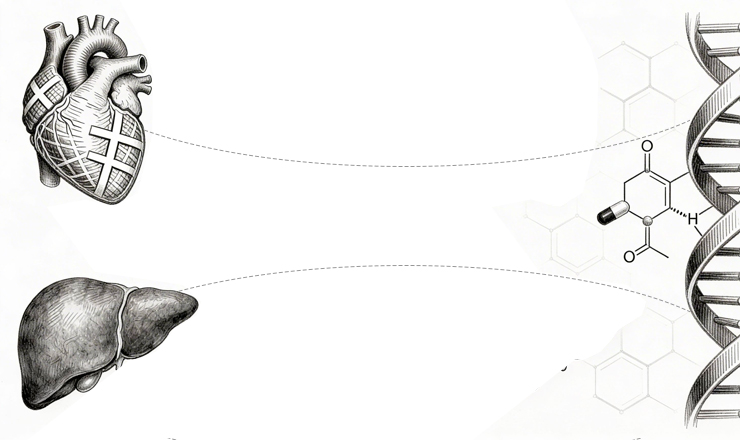
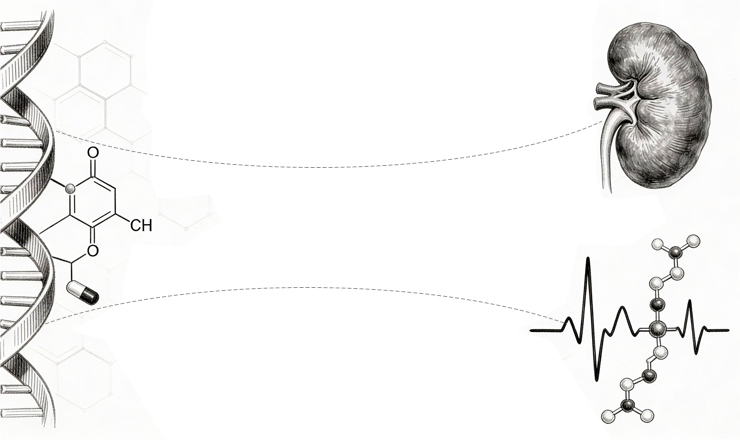
The service predicts five of the most serious and frequently occurring adverse drug effects:
Myocardial infarction — balanced accuracy (BA) = 0.74; area under the curve (AUC) = 0.85
Arrhythmia — BA = 0.71; AUC = 0.77
Cardiac failure — BA = 0.77; AUC = 0.86
Severe hepatotoxicity — BA = 0.67; AUC = 0.71
Nephrotoxicity — BA = 0.75; AUC = 0.82
All accuracy metrics were obtained by 5-fold cross-validation on datasets averaging more than 850 drugs per effect.
The structural formula can be entered in one of three ways: by uploading a MOL file, entering a SMILES string, or drawing the molecule in the Marvin molecular editor. After clicking "Make prediction," the system calculates two values for each of the five adverse effects: Pa (probability of being active) and Pi (probability of being inactive). If Pa > Pi, the compound is considered potentially active for that effect; the larger the Pa − Pi difference, the higher the likelihood of the effect manifesting in experiment or clinical trials. Results can be downloaded in SDF, CSV, or PDF formats.
ADVERPred is specifically designed for integration into the early stages of drug discovery, where rapid and cost-effective toxicity screening is critical. At these stages, thousands of candidate compounds may be under consideration, and running full experimental toxicological studies for each is neither practical nor economically feasible. This service enables medicinal chemists and pharmacologists to identify potentially dangerous compounds based solely on their structural formula, eliminating the need for laboratory or clinical testing.
The five predicted adverse effects: myocardial infarction, arrhythmia, cardiac failure, hepatotoxicity, and nephrotoxicity, were chosen deliberately, as they represent the most common reasons for drug withdrawal from the market and termination of clinical trials. Cardiotoxicity and organ toxicity of this kind are notoriously difficult to detect in animal models due to interspecies differences, and they frequently surface only in late-phase clinical trials, causing enormous financial losses and, more importantly, patient harm.
Beyond early-stage screening, ADVERPred can also be applied to repositioning studies and safety reassessment of existing compounds, as well as to the evaluation of novel chemical scaffolds where no experimental toxicity data yet exists. The training datasets used to build the models are openly available for download directly from the service's website in SDF format, enabling researchers to conduct their own analyses or build upon the existing models. Overall, ADVERPred serves as a practical, accessible, and scientifically validated tool that helps reduce the risk of late-stage toxicity failures by bringing adverse effect prediction to the very beginning of the drug development pipeline.

Early toxicity filtering in drug discovery. If you are working with novel drug-like compounds or lead structures, ADVERPred allows you to quickly flag potentially dangerous candidates for cardio-, hepato-, or nephrotoxicity before investing resources in laboratory synthesis or biological testing.
Scientifically validated and transparent. The underlying SAR models are built on manually curated, high-quality datasets with confirmed causal drug–effect relationships, achieving AUC values up to 0.86. The training datasets are openly downloadable, making the service suitable for academic research and reproducible studies.
Practical integration into cheminformatics workflows. ADVERPred fits naturally alongside other tools on the Way2Drug platform (e.g., PASS Online) and this enables a comprehensive in silico profiling pipeline, covering everything from predicting therapeutic activity to assessing major safety liabilities, all within a single web environment.
Sergey M. Ivanov et al. (2018)
ADVERPred–Web Service for Prediction of Adverse Effects of Drugs.
Journal of Chemical Information and Modeling, 58, 1, 8–11.
If you need to evaluate a large dataset, or if you need to maintain confidentiality of structural formulas transmitted via unsecured data channels, you can contact us to discuss the licensing opportunities.

© 2011 - 2026 Way2Drug. All rights reserved.