
Web services for research on antiviral compounds, HIV-1 sequence variation, drug-resistance mechanisms and treatment-response biology.
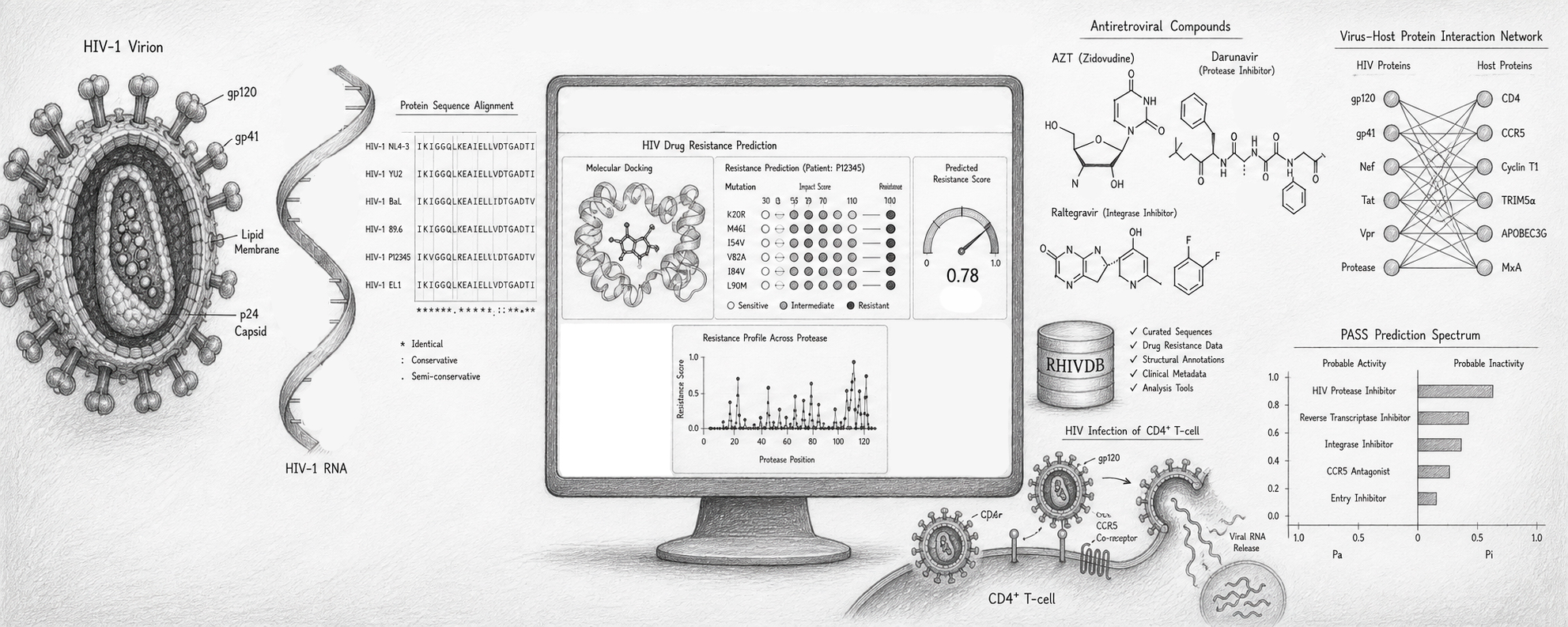
The Way2Drug platform provides a suite of in silico services for HIV/AIDS research, covering key areas ranging from the prediction of biological activity of potential antiretroviral compounds to the analysis of viral drug resistance and transcriptomic mechanisms of immune response to therapy.
The PASS (Prediction of Activity Spectra for Substances) is used to assess the potential antiretroviral activity of chemical compounds prior to their synthesis and experimental testing. The PASS algorithm is applied in approaches for predicting drug exposure in HIV-1 and, in particular, is used to build models evaluating the pharmacotherapeutic properties of a drug against a specific viral variant, thereby reflecting the development of resistance. The Way2Drug platform tools are used to predict the biological activity of newly synthesized compounds, including those in the field of anti-HIV/anti-cytomegalovirus therapy. In particular, the PASS resource was employed during the development of heterodimeric compounds with dual activity against HIV-1 and cytomegalovirus to predict the activity spectrum prior to biological testing. The synthesized AZT-based heterodimers demonstrated EC50 values against HIV-1 in the range of 0.21–1.96 μM with a high selectivity index. This approach reduces the experimental workload and enables targeted selection of candidate compounds for further investigation.
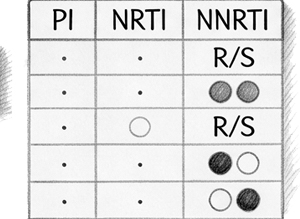
The Way2Drug platform hosts the HVR web service, designed to predict HIV-1 resistance to antiretroviral drugs based on the amino acid sequences of reverse transcriptase and protease. The service implements a Naive Bayes algorithm with string multi-n-gram descriptors. For most drugs in clinical use, a balanced accuracy in the range of 0.76–0.95 has been achieved. Input sequence alignment using the Smith–Waterman algorithm enables correct processing of sequences of arbitrary length, making the service applicable to both research and clinical tasks.
Additionally, models for quantitative prediction of resistance to HIV-1 protease inhibitors (fold resistance, log10FR) have been developed using support vector regression and self-consistent regression models. The coefficient of determination R2 ranges from 0.828 to 0.909 for eight of the nine drugs studied. A previously developed random forest method based on peptide and nucleotide descriptors achieved an average sensitivity of 0.93–0.94 and AUC of 0.93–0.94 for reverse transcriptase and protease inhibitors.
The Way2Drug platform hosts the RHIVDB database, containing 1,651 amino acid sequences of HIV-1 proteins collected primarily from Russian patients, along with data on antiretroviral therapy history, CD4+ cell counts, and viral load. The database enables analysis of the efficacy of specific drug combinations, identification of mutations associated with the use of individual antiretroviral agents, and construction of predictive models for therapeutic applications. RHIVDB is used in international research: data from the database were included in an analysis of the spectrum of HIV-1 protease mutations selected by atazanavir, involving patients from Russia and European countries.
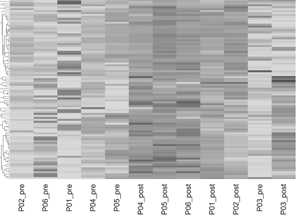
The Way2Drug platform supports transcriptomic studies of HIV infection. We performed a paired RNA-seq analysis of peripheral blood mononuclear cells in antiretroviral therapy-naïve patients before and 24 weeks after initiation of combination therapy (TDF/3TC/DTG). A total of 87 differentially expressed genes were identified, 67 of which were downregulated. These genes were predominantly from interferon-stimulated pathways, such as IFI44L, ISG15, and STAT1. This reflects a transition from chronic immune hyperactivation to a more homeostatic state. Early immune recovery under antiretroviral therapy is accompanied by a reduction in chronic interferon-mediated activation and may correspond to partial restoration of T-cell functional capacity.
In the development of the Way2Drug platform, we applied machine learning methods to analyze HIV-1 interactions with host proteins. Our goal was to identify new antiretroviral therapy targets and create network models of pathogenesis. The methodology includes weighted gene co-expression network analysis and the Connectivity Map approach, which enables identification of chemical compounds that induce a transcriptional profile opposite to that of HIV-infected cells.
The combined use of all tools available on the Way2Drug platform provides a continuous pipeline for anti-HIV drug development: from predicting the activity of chemical compounds via PASS to the clinical evaluation of resistance in specific viral variants via HVR, making Way2Drug a unique integrated solution in the field of HIV/AIDS-oriented medicinal chemistry, bio- and cheminformatics.

© 2011 - 2026 Way2Drug. All rights reserved.


