

In the framework of biological activity spectra developed by the Way2Drug team, a drug-like compound's interaction with a biological system is treated as a connected, multilevel process encompassing molecular, cellular, tissue/organ, and organismal scales. This framework is operationalized through PASS Online, the platform's flagship service, which predicts more than 4,000 types of biological activity, spanning pharmacological effects, mechanisms of action, and toxic and adverse effects, directly from a compound's structural formula, with an average cross-validated accuracy of approximately 95%.
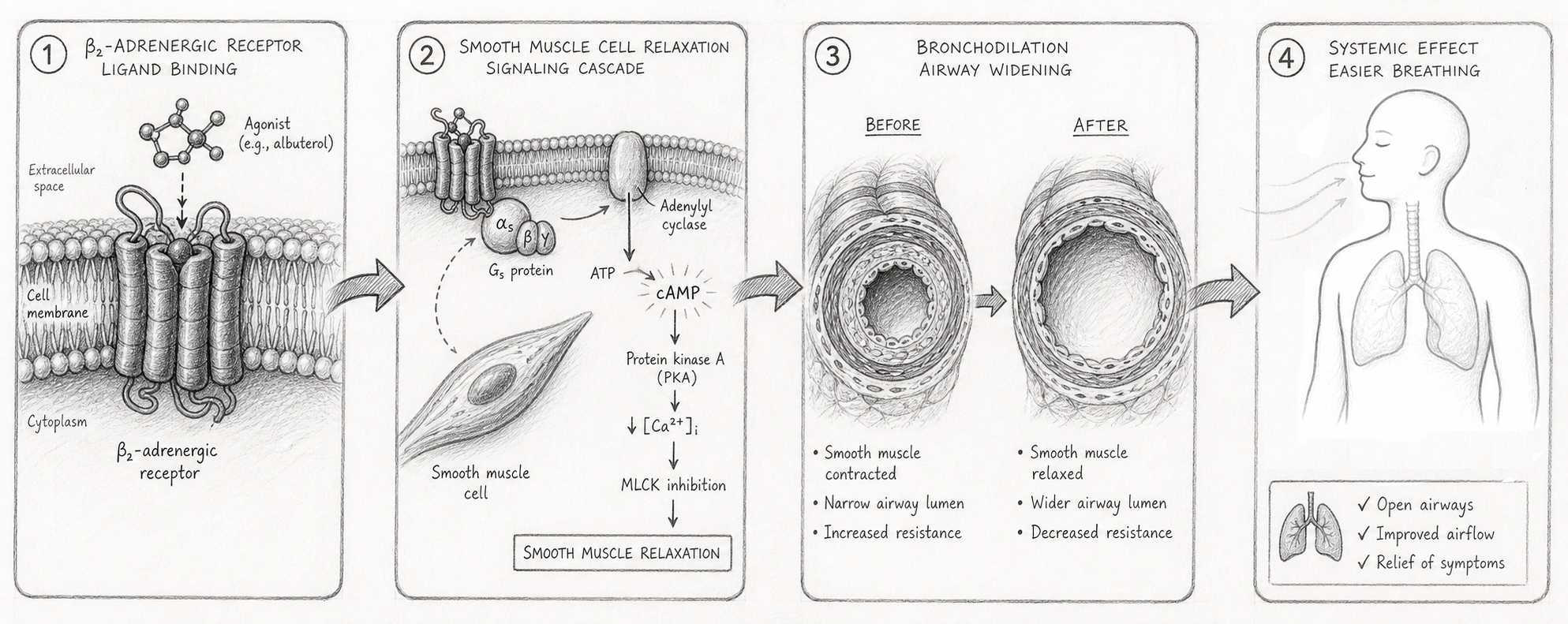
Here, the mechanism of action (MoA) is not limited to a single molecular event but should be understood in terms of the hierarchical organization of biological systems. This means there is a cross-level relationship between mechanisms and effects: a pharmacological effect seen at one level can act as the MoA at a higher level. For example, activation of β2 adrenergic receptors at the molecular and cellular levels leads to bronchodilation at the tissue level, which in turn produces the antiasthmatic effect at the level of the whole organism.
An anticoagulation effect is another example of MoA. It serves as a core MoA underlying more comprehensive therapeutic activities predicted by PASS, including antianginal, antiarrhythmic, and antithrombotic effects, as well as the treatment of stroke, myocardial infarction, and deep vein thrombosis. At that, this anticoagulation activity can be caused by other diverse MoA, such as the inhibition of factors IIa, IXa, VIIa, X, Xa, XII, and XIIIa, thrombin inhibition, platelet aggregation inhibition, fibrinogen receptor antagonism, and factor VII stimulation, among others.
The examples of MoA at cellular level are macrophage stimulant (related with antianginal, antineoplastic, atherosclerosis treatment, chemoprotective, immunostimulant and radioprotector effects) and platelet aggregation inhibition causing anticoagulation, antiischemic, antithrombotic, nootropic effects and used for vascular (peripheral) disease treatment. The example of MoA at organism level is antibacterial activity (related with antiacne effect and septic shock treatment), for which we propose to use the specialized AntiBac-Pred service, which classifies compounds as growth inhibitors or non-inhibitors against 353 bacterial strains using MNA descriptors based Naive Bayes models trained on curated ChEMBL data.
In this way, MoA is a context-dependent concept that connects different layers of biological organization. We also extended the traditional definition of mechanisms of action to include not only drug–target protein interactions but also molecular engagement with transporters and metabolic enzymes, alongside downstream gene expression shifts that mediate pharmacological or toxicological responses. This extended definition is directly supported by several platform services: PASS Targets predicts interactions between small molecules and 2,507 human and non-human protein targets, achieving average ROC AUC of 96–97% in cross-validation. Transporter- and enzyme-level engagement is captured by DDI-Pred, which models drug–drug interactions mediated by seven major cytochrome P450 isoforms using PoSMNA (Pairs of Substances Multilevel Neighbourhoods of Atoms) descriptors, and by P450-Analyzer, which quantitatively predicts inhibition and induction of five CYP isoforms. Downstream gene-expression shifts are addressed by DIGEP-Pred, which predicts drug-induced changes in gene expression profiles using training data derived from the Comparative Toxicogenomics Database, thereby linking chemical structure to transcriptomic responses that mediate higher-level pharmacological outcomes.
Metabolic engagement is further elaborated through MetaPASS, which analyzes the biological activity spectrum of a compound while accounting for its predicted metabolic transformations using data on metabolic pathways from ChEMBL, DrugBank, and other sources, and MetaTox 2.0, which predicts probable biotransformations of xenobiotics together with the biological activity spectra of both parent compounds and metabolites across 1,957 activity types. Quantitative structure–activity relationships underpinning dose- and potency-dependent mechanistic contributions are modeled with GUSAR Online, which builds QSAR/QSPR models for endpoints such as acute toxicity and antitarget interaction potency.
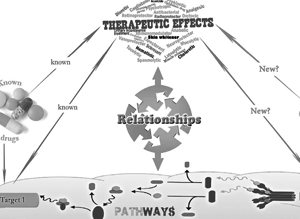
In line with this view, the mechanism-effect relationships built into the PharmaExpert expert system go beyond direct compound-target interactions to include higher-level biological events that contribute to the observed pharmacological outcomes. PharmaExpert operates on a formalized knowledge base encoding relationships between predicted biological activities, known drug interactions, protein targets, signaling and regulatory pathways, biological processes, and therapeutic or adverse pharmacological effects, enabling systematic identification of compounds satisfying a desired combination of activities while excluding those with defined toxic properties. These events can be seen as secondary mechanistic factors linking primary molecular interactions to system-level responses.
Such an interpretation aligns closely with the broader idea of "mode of action" used in toxicology, which allows for multistep, multiscale biological processes and is not tied to strict molecular definitions. By combining data from assays performed at different levels of biological organization, this approach gives a more complete and realistic picture of drug action, reflecting the complexity and interconnection of biological systems in humans.
Mechanism-effect relationship analysis is crucial for predicting the spectrum of biological activity. It not only helps interpret the cause of pharmacological effects but also increases the chance of experimentally confirming the predicted pharmacotherapeutic effects of the studied compounds while simultaneously predicting the mechanisms of action associated with them.

© 2011 - 2026 Way2Drug. All rights reserved.


